Physical Address
304 North Cardinal St.
Dorchester Center, MA 02124
Physical Address
304 North Cardinal St.
Dorchester Center, MA 02124

Morris County's Environmental Resource
Morris County's Environmental Resource
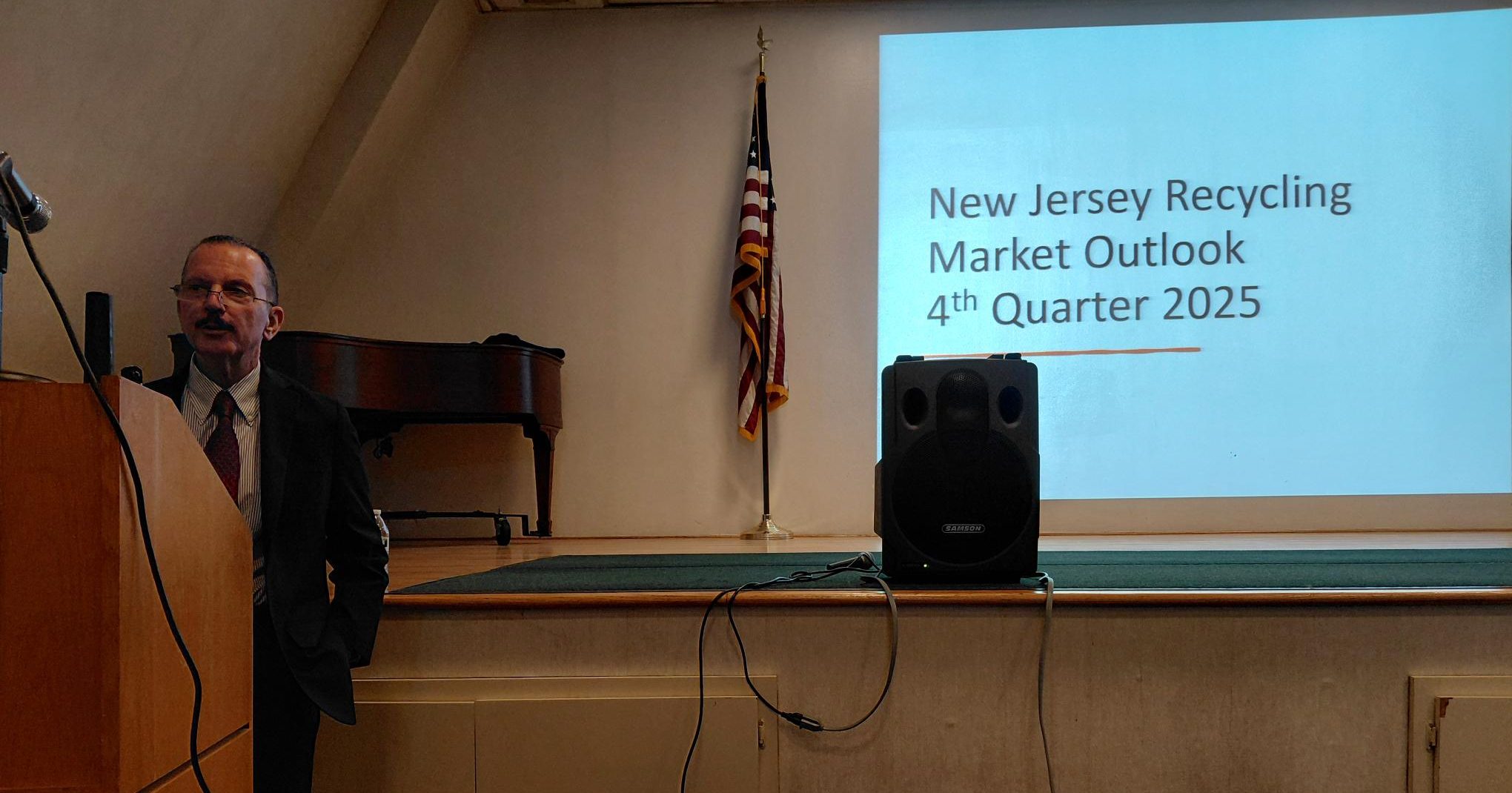
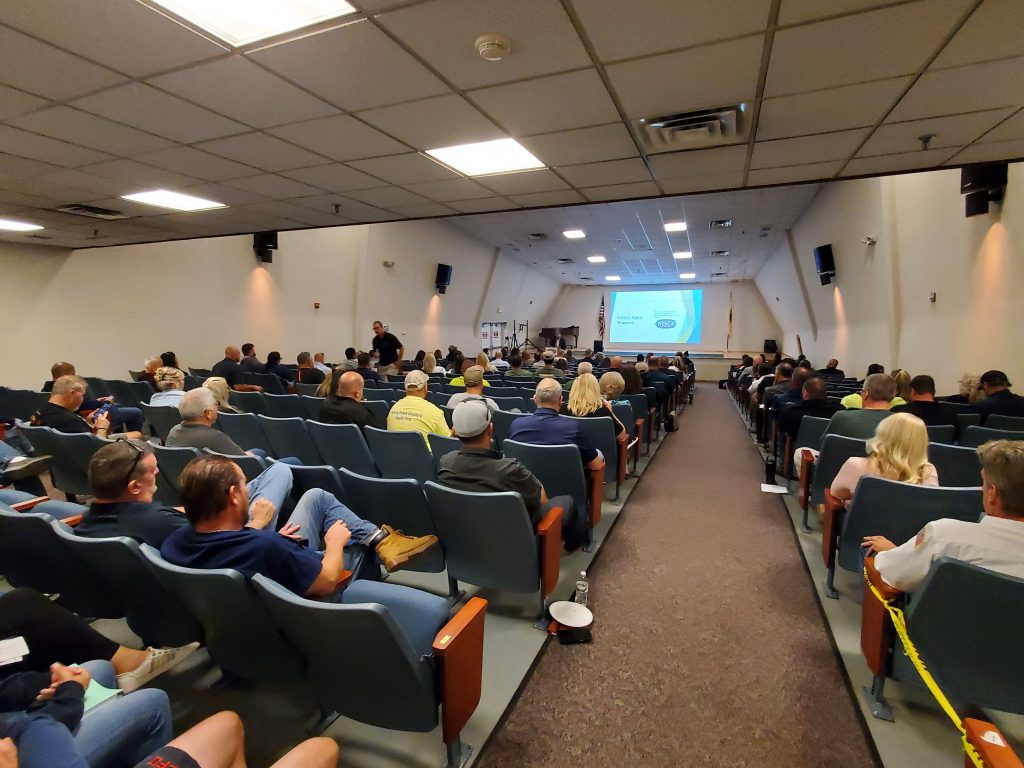
September 30, 2025 5-County Recycling Coordinators Meeting, 9:30 am – 12:30 pm
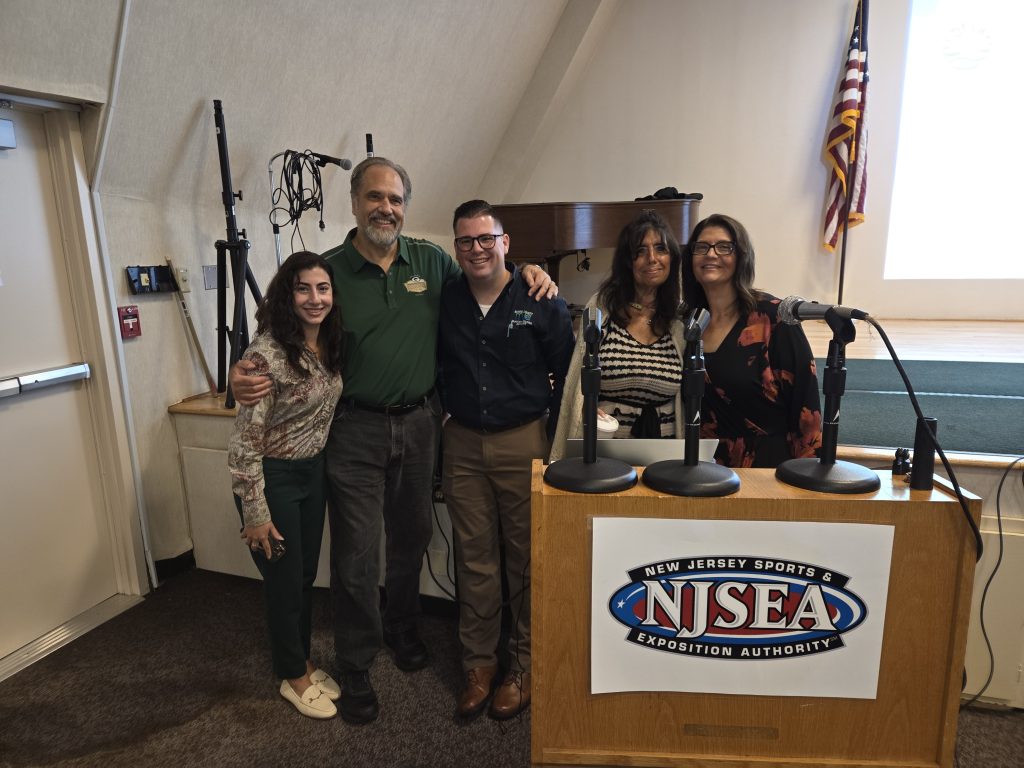
New Jersey Sports and Exposition Authority (NJSEA)
Meeting Attendees Received (sign-in sheet is provided at the bottom of this page)
This meeting was hosted by:
Meadowlands Environment Center, Auditorium, Two DeKorte Park Plaza, Lyndhurst, NJ 07071
Approved CRP Credits: 2.5 Classroom
Approved CPWM Credits: 1.5 Government & 1 Management (course #17744)
WELCOME and INTRODUCTIONS
Wayne DeFeo, Essex County’s Solid Waste & Recycling Coordinator, began introductions and welcomed the following County Coordinators:
NJSEA PROGRAMS FOR THE PUBLIC – Francisco Artigas, NJSEA
Francisco Artigas briefly gave a general characterization of the Meadowlands, which included:
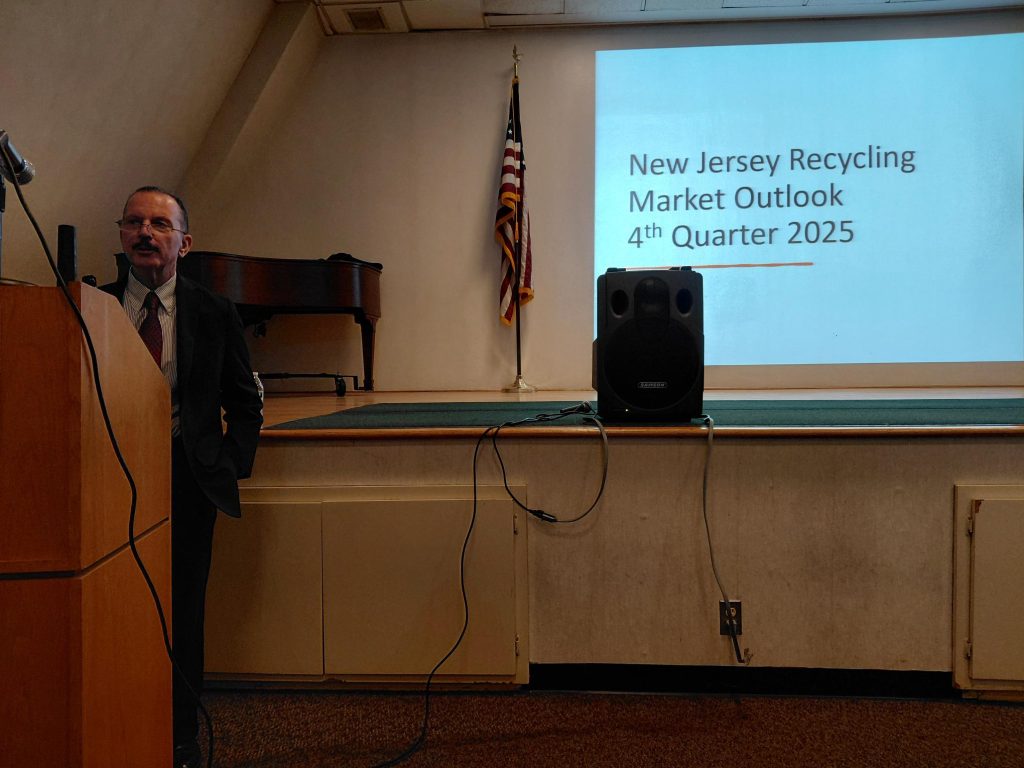
RECYCLING MARKET UPDATE – Michael Mastrangelo, Interstate Waste Services
The speaker gave an NJ recycling market outlook for the fourth quarter of 2025. His presentation included the following summaries:
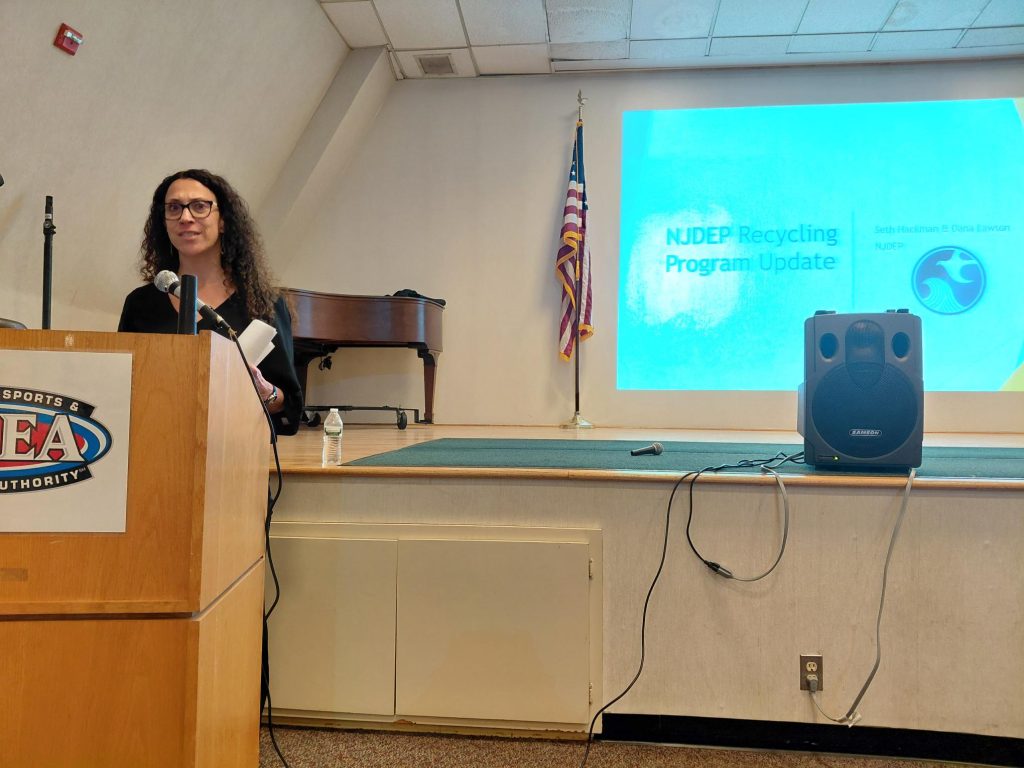
NJDEP RECYCLING PROGRAM UPDATE – Director Seth Hackman & Assistant Director Dana Lawson, NJDEP Division of Sustainable Waste Management
Director Seth Hackman gave updates on the following topics:
Assistant Director Dana Lawson then gave updates on the following topics:
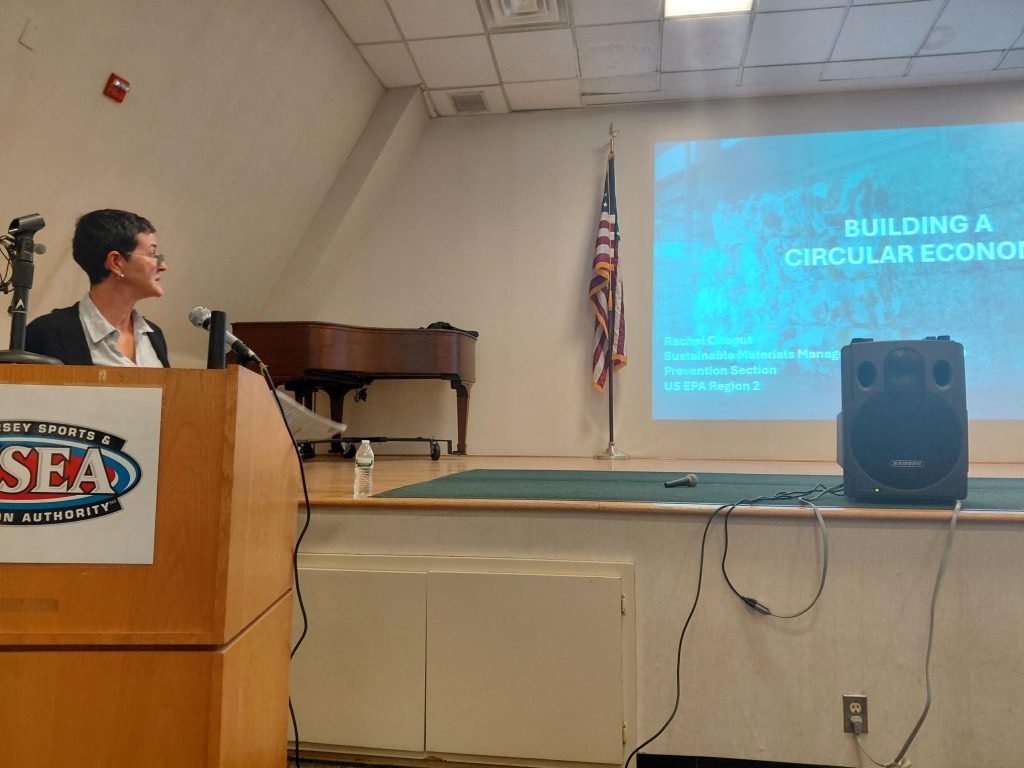
NJDEP US EPA REGION 2’s SUSTAINABLE MATERIAL MANAGEMENT PROGRAM, Building a Circular Economy from Region 2: Sustainable materials management and Pollution – Rachel Chaput, USEPA
Rachel Chaput discussed recycling as part of the bigger picture within solid waste management. Specifically, she mentioned:
EV Incentives – Ed Howell, PSEG
PSEG can provide help with infrastructure, i.e., getting power to your site. PSEG also has a fleet advisory program for people considering these types of projects.
NJ Clean Cities Coalition ELECTRIC VEHICLE/EQUIPMENT DEMONSTRATION – Ed Howell, PSEG
EVs were parked outside for attendees to view, and they were given half an hour from 11 to 11:30 to see them. They included a garbage truck, F-150, and a mustang.
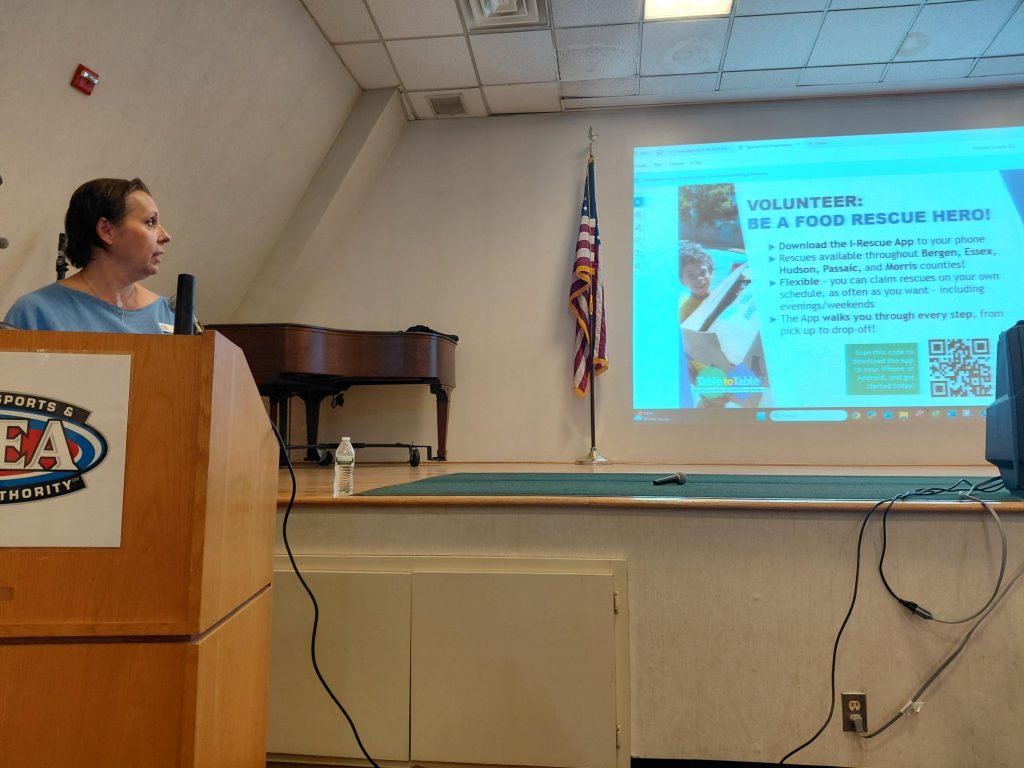
FOOD WASTE/TABLE to TABLE – Julie Kinner, Table to Table (Saddle Brook)
Currently, Table to Table operates in five counties, working towards bridging the gap by rescuing healthy perishable food and delivering it to people who need it. They have six refrigerated trucks with drivers, over three hundred volunteers, have many food donor partners, and they work with anywhere there is wasted food. It was highlighted that they:
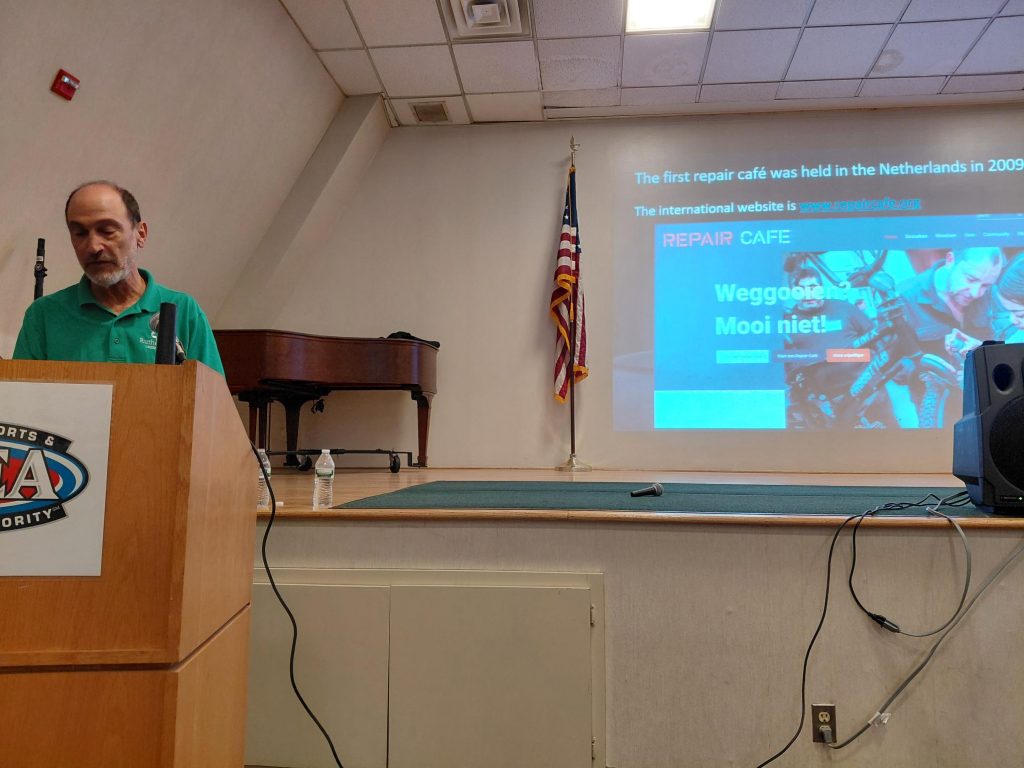
REPAIR CAFÉ – Brian Hanson-Harding, Rutherford Repair Café
Brian Hanson-Harding, a member of the Rutherford Green Team, organized a repair café to keep trash out of the waste stream and build community. A repair café is a community event where people can get things repaired for free. The website repaircafegs.org lists at least seven regular cafes in NJ, and has a starter kit that was helpful for the speaker in starting his repair café. Reasons he discussed to hold a repair café include:
The speaker also went over the objects that get repaired, as well as the processes of setting up and having clients sign in / a waiver. The speaker then discussed various things that were needed at a repair café like outlets, bathrooms, etc. and venue considerations, as we;as having repair coaches. He recommended keeping track of different repair types, getting feedback, and recruiting high school students in to learn how to make repairs themselves.
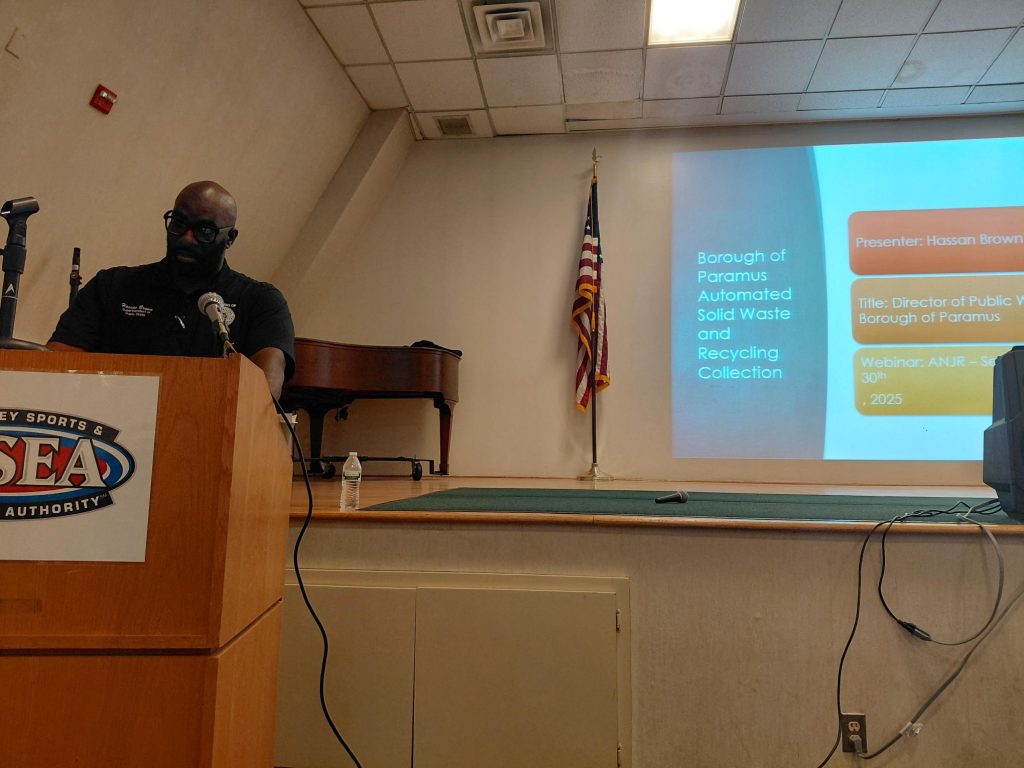
AUTOMATED SOLID WASTE/RECYCLING COLLECTION – Hassan Brown, Borough of Paramus
Hassan Brown discussed his experience implementing automated collection in Paramus, stating the hardest part was getting buy in from the council. An initial hurdle included people worried about losing jobs, but no one lost their jobs; responsibilities shifted. Costs include trucks and bins if the municipality provides them. Regarding health and safety, work compensation claims dropped but some drivers developed wrist issues from the repetitive joystick motion.
He provided a summary of recommendations including:
He also recommended passing an ordinance describing whether residents receive cans or are responsible for purchasing them as well as other details.
For a more detail of each presentation and Q&A, please refer to the attached meeting summary document and presentation slides.